Guest service on demand
How Chateau Event Center answers every inquiry in seconds. More events booked, hours saved every week.
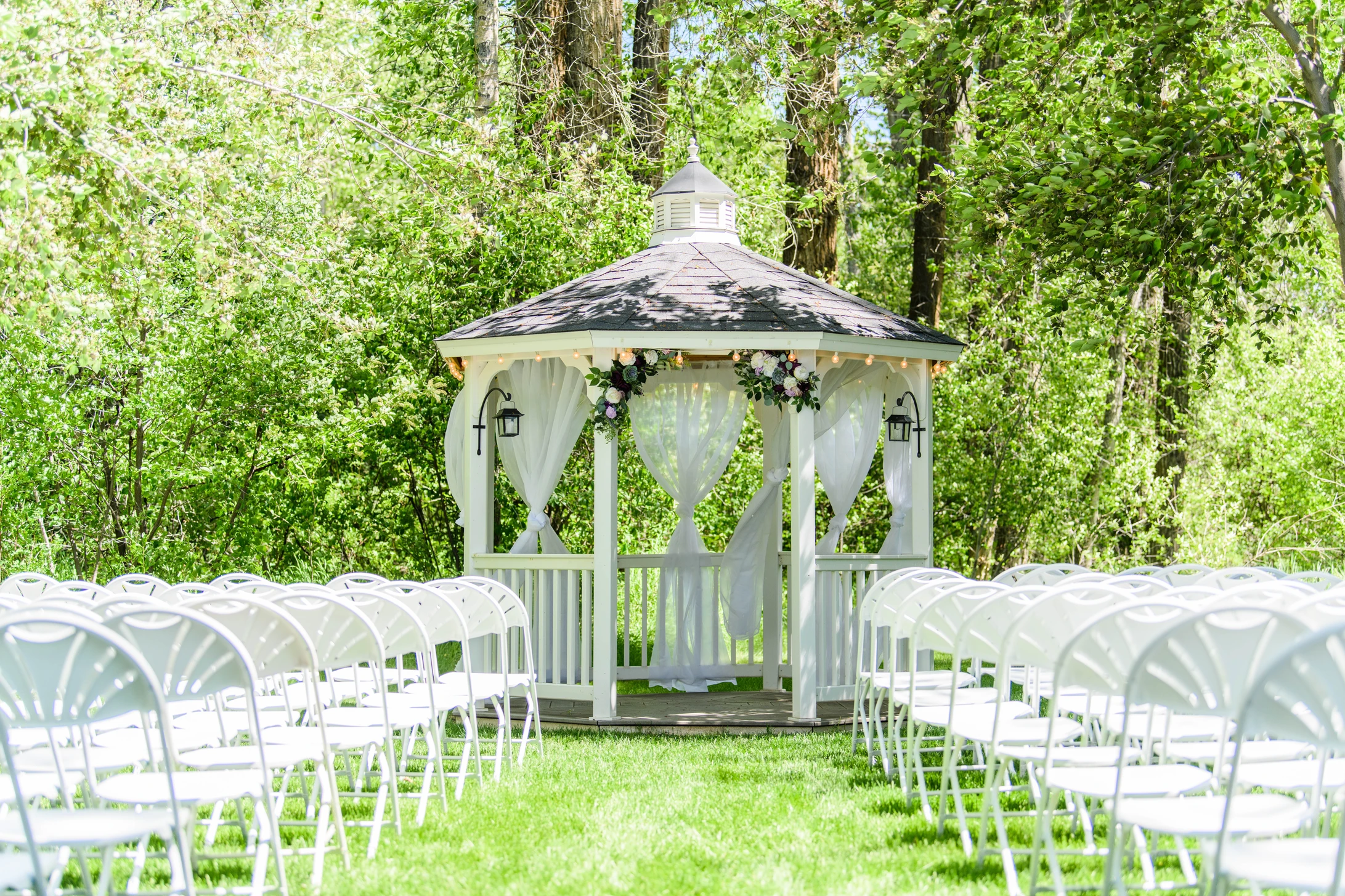
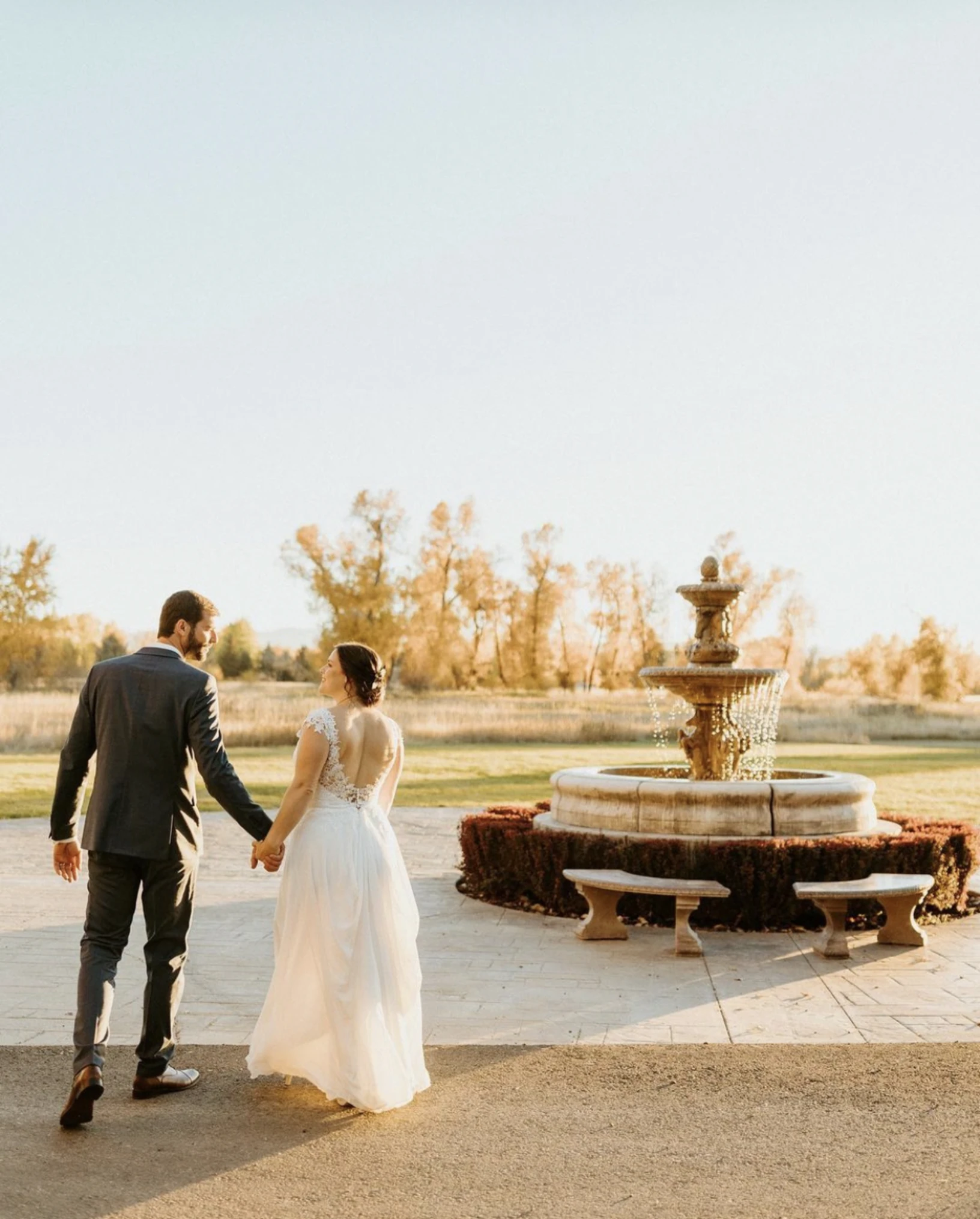
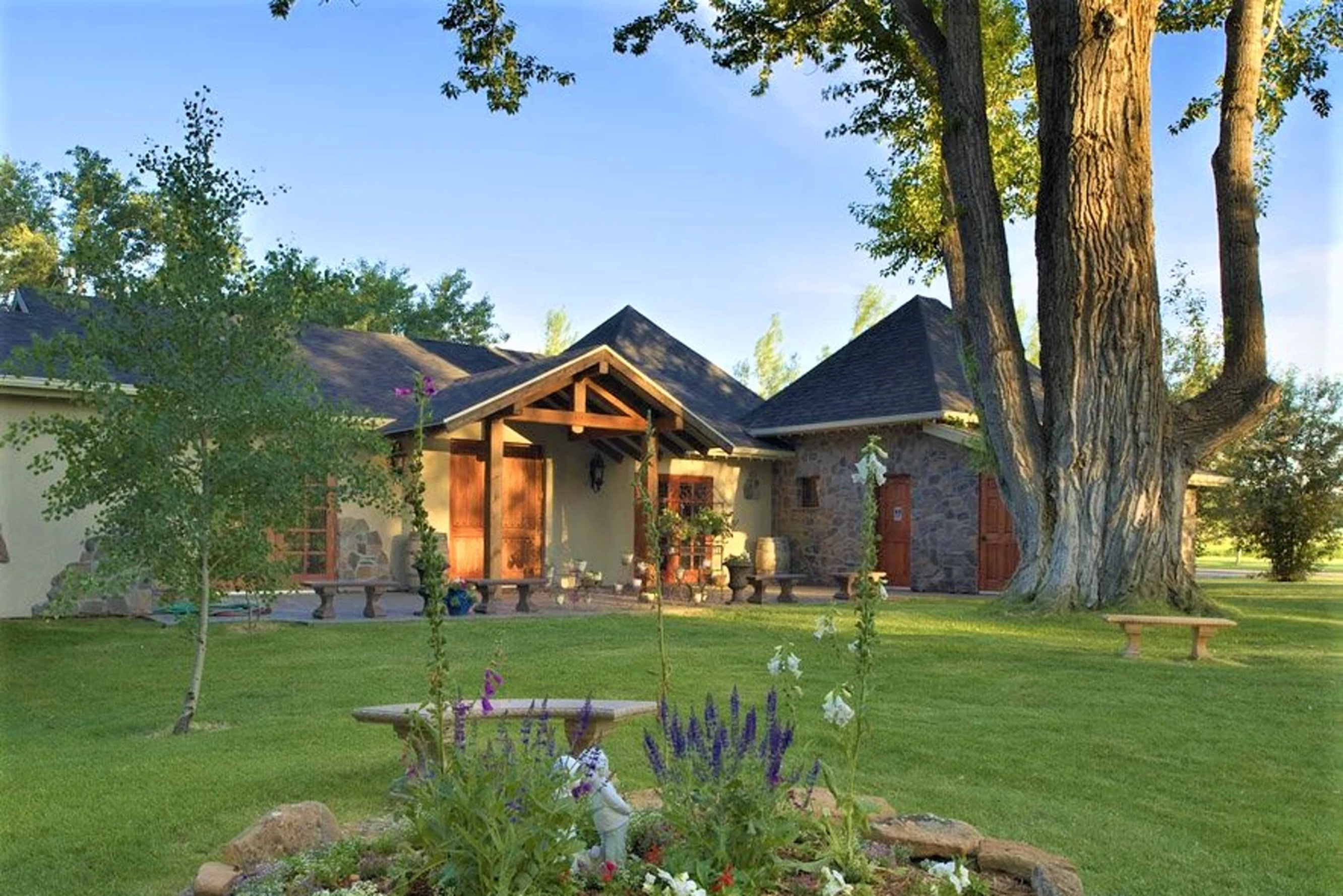
Whitney and her husband run the Chateau Event Center, an up to 150 person venue that hosts weddings, corporate events, graduation parties, and private celebrations. Their work centers on moments that matter deeply to the people planning them, and Whitney takes that responsibility seriously.
In our conversations, it became clear how much of herself she puts into that work. Guests are not treated as inquiries to process, but as people trusting her with important days in their lives. She spends the time it takes to get things right, from the first message through the site visit and all the way to the event itself.
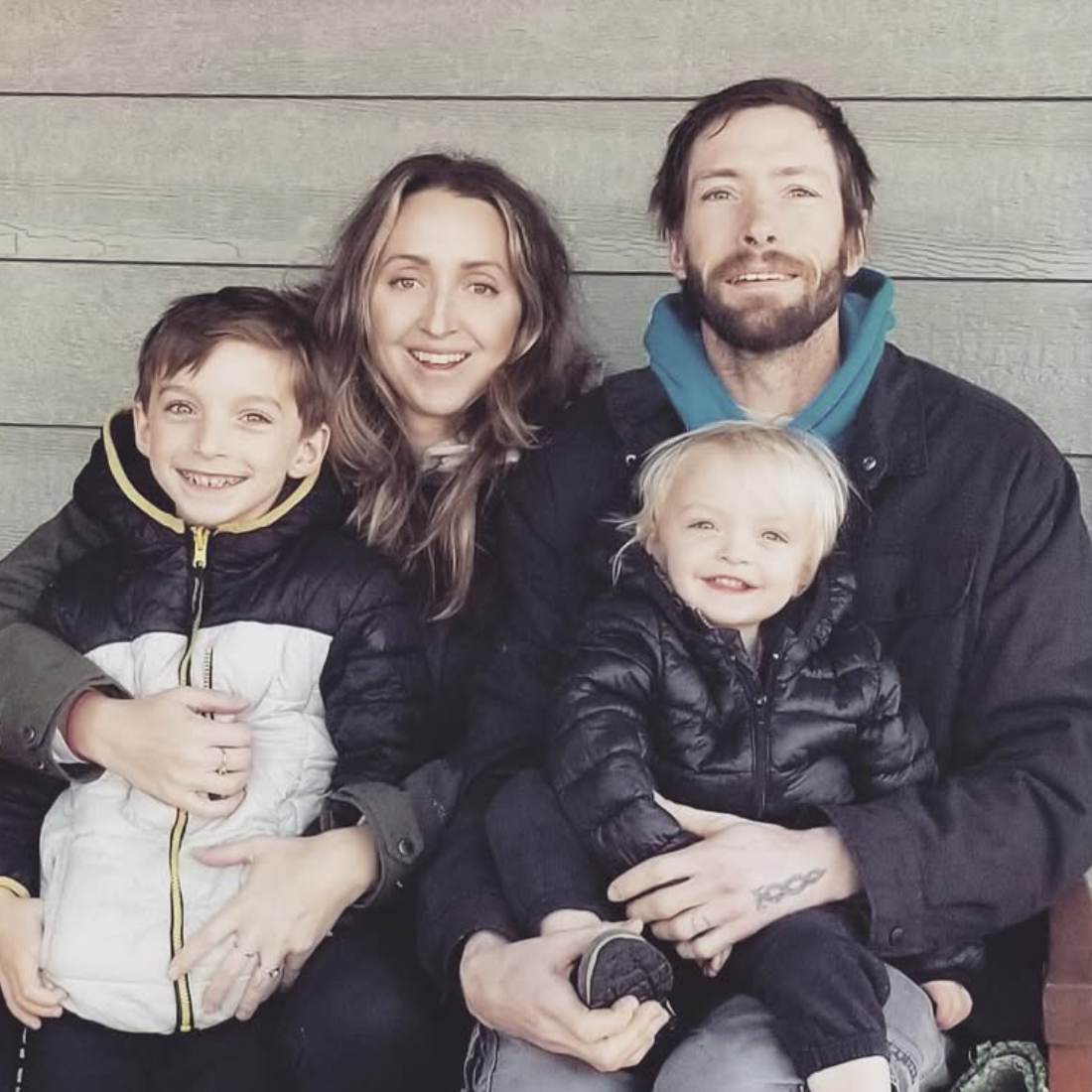
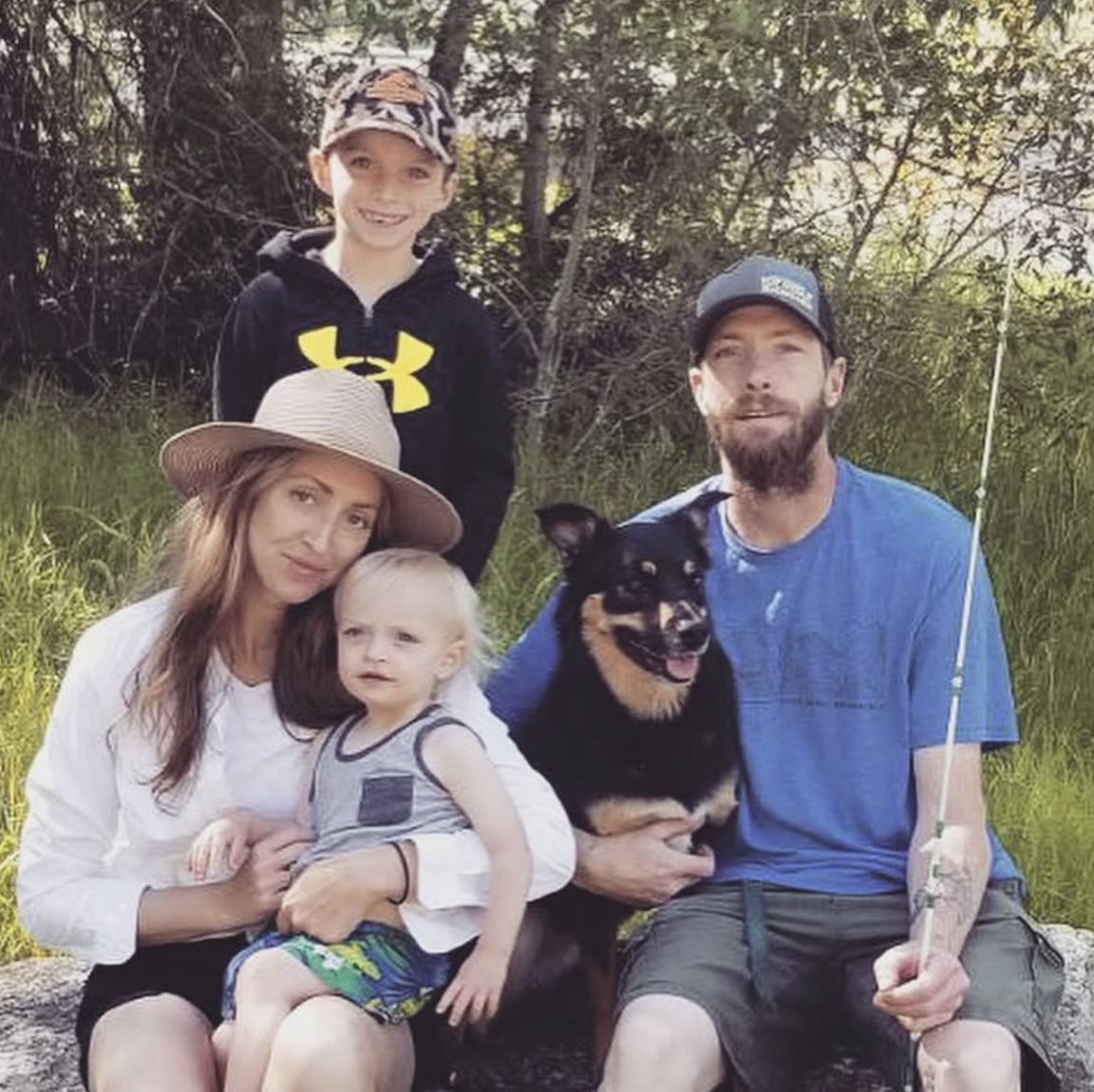
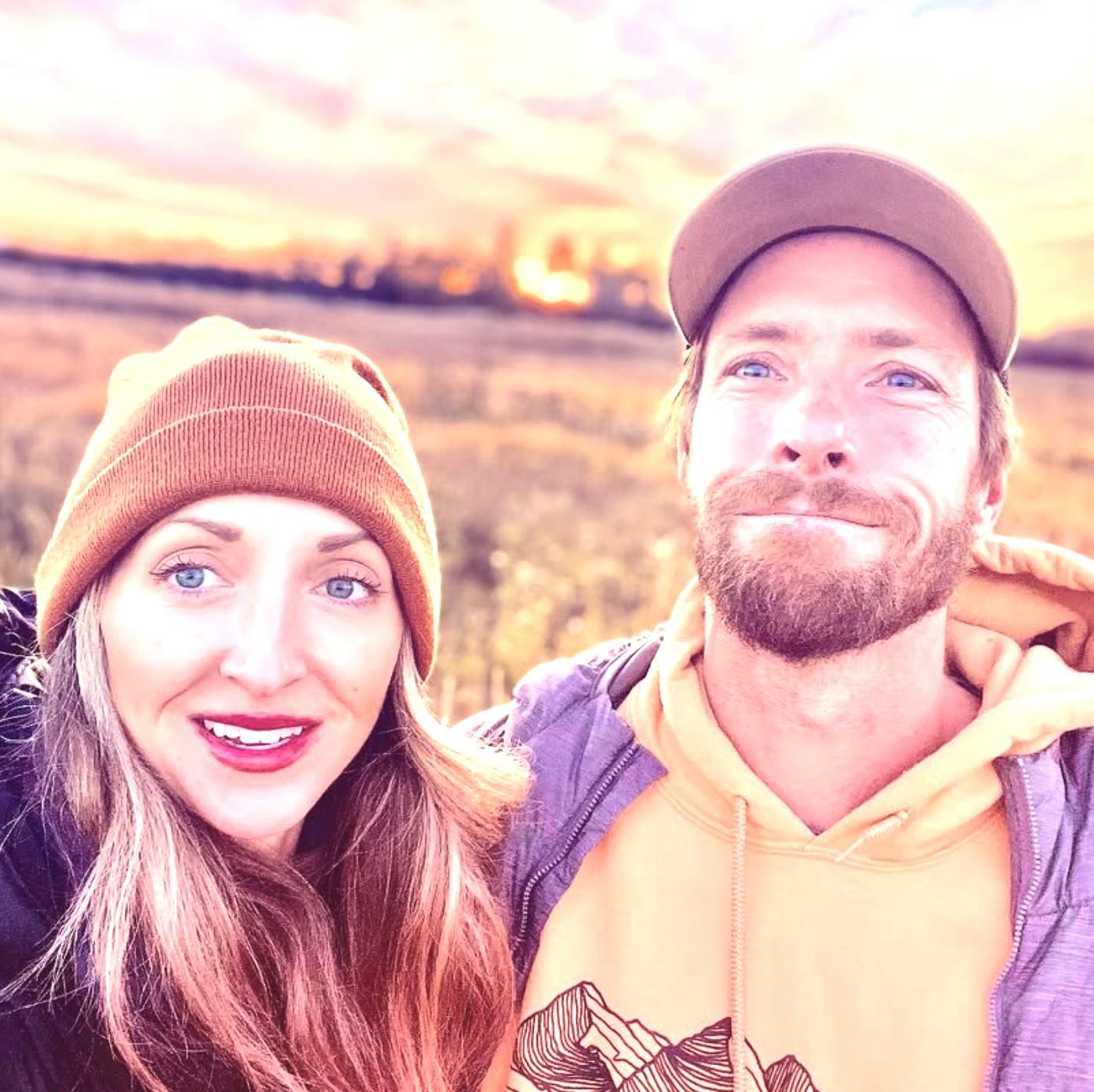
That dedication takes a real toll on her personal time.
Group inquiries arrive constantly, often at night, on weekends, or while events are already underway. Staying responsive means being mentally on call most of the time, even when Whitney is trying to step away and be present with her family.
That pressure intensifies during peak season. Spring, summer, and fall bring the highest demand for bookings at the same time the venue is busiest operationally. New inquiries arrive while live events are already in motion.
What Whitney described reflects a broader pattern across group hospitality. Inquiry volume continues to rise, guest expectations have shifted toward immediate answers, staffing has become harder and more expensive, and most tools still rely on manual review and follow up. Time is the first thing to break when those forces collide.
When we decided to run a pilot together, the goal was clear: help guests get real answers immediately, including pricing and visual context, while giving Whitney meaningful time back with her family.
Before Line: a workflow built on back and forth
Before Line, inquiry handling at Chateau Event Center relied on manual coordination and constant availability. Inquiries arrived through email or forms. Whitney checked availability, assessed fit based on capacity and pricing, and responded using adapted templates. Progress depended on repeated back and forth to answer questions, clarify details, and decide whether a site visit made sense. Guests wanted fast clarity on pricing, availability, and overall feel. The venue needed the same clarity before investing time. Bridging that gap required frequent follow up and real time judgment.
Key characteristics of the pre Line workflow
- Email served as the primary system of record
- Pricing and feasibility were evaluated manually
- Site visits required repeated coordination
- Inquiry status lived in notes or memory
- Responsiveness depended entirely on operator availability
During the pilot: from inquiry to action
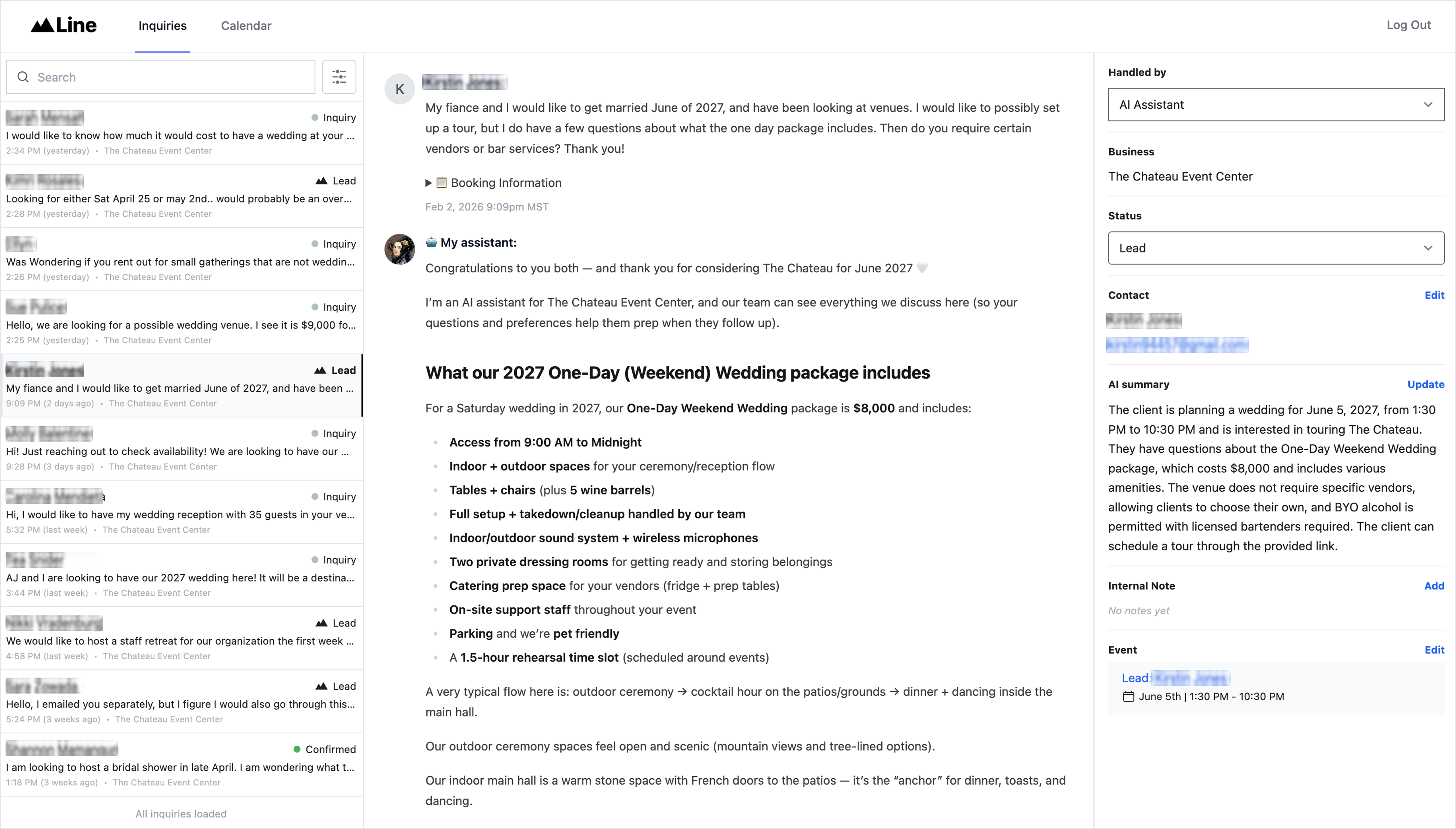
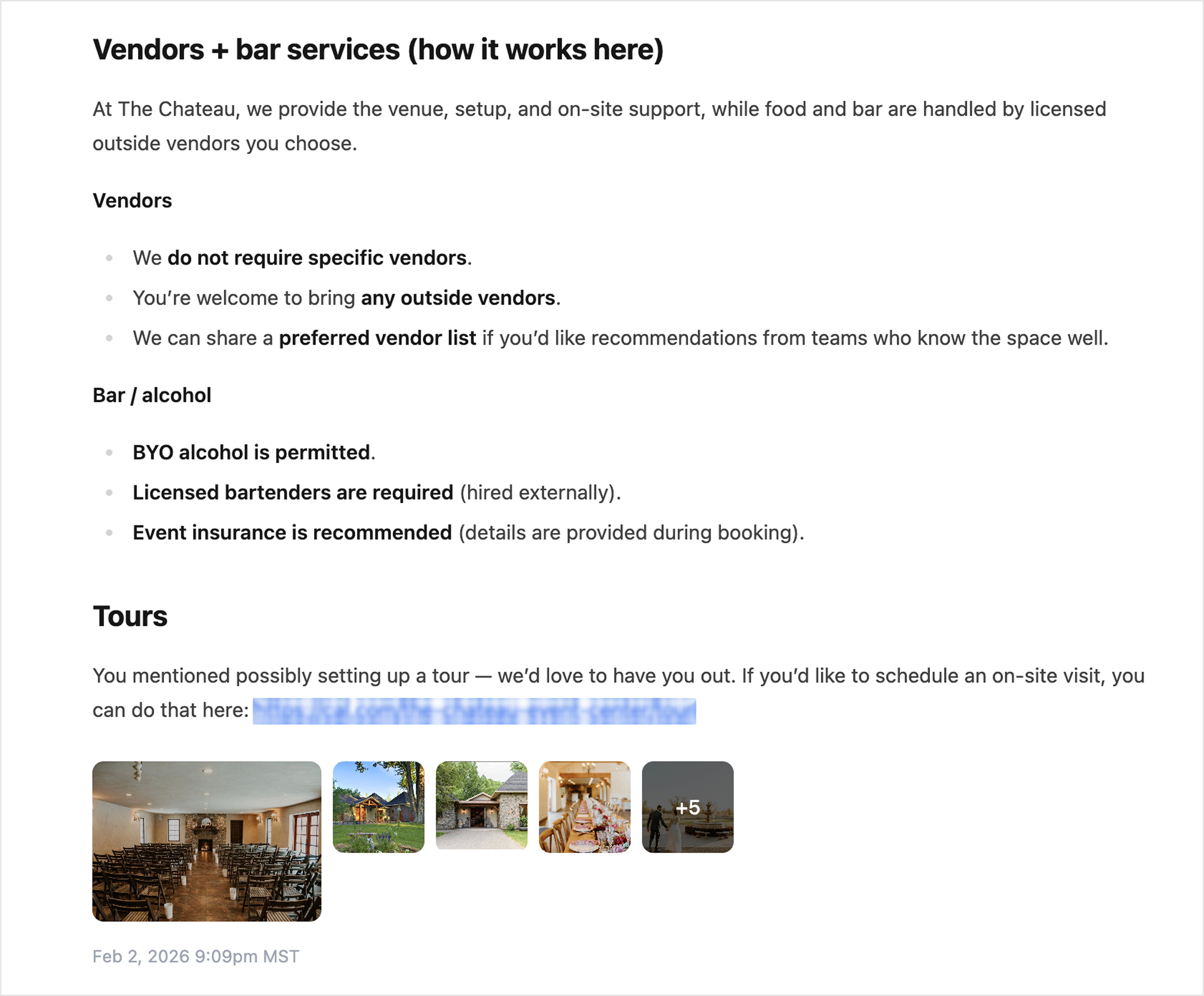
With Line in place, the system absorbs the early back and forth and handles the first interaction end to end. Guests get pricing, guidelines, and visual context immediately. At the same time, the system qualifies the inquiry in the background, capturing pace, intent, and fit. Some inquiries move quickly toward a decision, others unfold more gradually. In both cases, the system maintains momentum and preserves context, so Whitney can step in with the right information, on her time.
What changes in practice
For guests
- Immediate interaction instead of forms and waiting
- Early clarity on pricing, availability, and fit
- Real time answers in the venue’s own voice
- Clear next steps when there is alignment
For Whitney
- Automatic qualification replaces manual triage
- Qualified inquiries move directly to site visits
- Status and priority are visible in one place
- Time is spent closing business, not coordinating
 Moving qualified inquiries to action
Once an inquiry meets the venue’s parameters, the agent advances it to the next action Whitney has defined. In this example, the system schedules a site visit and reflects discussed dates on the calendar, maintaining momentum toward booking.
Moving qualified inquiries to action
Once an inquiry meets the venue’s parameters, the agent advances it to the next action Whitney has defined. In this example, the system schedules a site visit and reflects discussed dates on the calendar, maintaining momentum toward booking.
Retrospective insights, outcomes, and focus moving forward
“I never would have expected to be able to create something like this myself. This gave a non technical person the ability to actually put an AI agent to work for me.”
That comment stood out because it reflects a broader pattern we continue to see across group hospitality. AI is widely talked about, but rarely embedded into the day to day systems operators actually rely on. Legacy tools still dominate, placing the burden of manual input and follow up on the operator. Our focus is to make AI accessible by building it directly into these workflows, so repetitive coordination is handled by the system rather than the person.
As Whitney began asking guests directly about their experience, a consistent sentiment emerged.
“I loved getting all the information about pricing and answers right away. Once I saw it was a good fit, I was able to schedule a site visit immediately.”
That feedback highlighted what was working on the guest side: early clarity, no pressure, and the ability to move forward at the right moment.
“A qualified guest booked a site visit entirely through the AI.”
The first interaction was matching both sides in real time. Guests were looking for pricing, availability, and overall feel. The venue needed the same signals before investing time. Line served as a matchmaker for those criteria, preserving context and advancing only the right inquiries.
With Line in place, Whitney described it as retraining herself to relax. That shift created space to focus on live events, be present with family, and apply judgment where it had the greatest impact.
What we observed
Quantitative
- First response moved to seconds, instead of days
- Saves 8+ hours per week of scheduling and back-and-forth
- Site visits booked automatically, without manual coordination
Qualitative
- Reduced reliance on email templates
- Clearer prioritization across inquiries
- Less cognitive load during busy event periods
- Guests arriving at site visits more informed and aligned
Taken together, these outcomes show how inquiry volume can increase without requiring more operator time or staffing.
What we learned and where we are focusing next
Working closely with Whitney throughout the pilot, and comparing notes with other operators, clarified where Line delivers the most value today and where deeper focus is needed next.
- Helping guests imagine their event
This is live today: Line brings scenario specific visuals directly into the chat, so guests don’t have to browse a generic gallery. They love getting clear, relevant context fast. We’re extending this with more tailored galleries plus video and virtual tours embedded naturally in the conversation. - Availability and calendar clarity
Availability remains one of the hardest challenges in group hospitality. We are focusing on clearer real time availability, better support for tentative holds across multiple dates, improved mobile calendar visibility, and tighter calendar synchronization so operators can trust what is being shown without manual cross checking. - Reducing proposal and contract overhead
Proposals and contracts still require repetitive manual work for many venues. We are focusing on bringing more of that workflow into one place, reducing handoffs, and making it easier to move from interest to booking without unnecessary friction.
These focus areas reflect what operators care about most as volume increases: clarity early in the process, fewer interruptions throughout the day, and less manual coordination overall.
Why this matters and our promise
For Whitney, this pilot was about preserving and elevating the level of care her guests expect, while reclaiming time that had slowly been consumed by constant responsiveness.
Across group hospitality, we hear the same desire again and again. Operators want time back with their families and fewer reasons to be tied to inboxes and desks, so they can focus on what makes hospitality great: the people running it and the experiences they deliver.
Our promise is to be a group hospitality partner on first click for guests and a technical partner for operators, making AI accessible in a way that improves workflow efficiency without sacrificing care. Whitney represents exactly who we are building for, and we are honored to be in service of operators like her.
Want guest service on demand at your property?
Apply for early access